
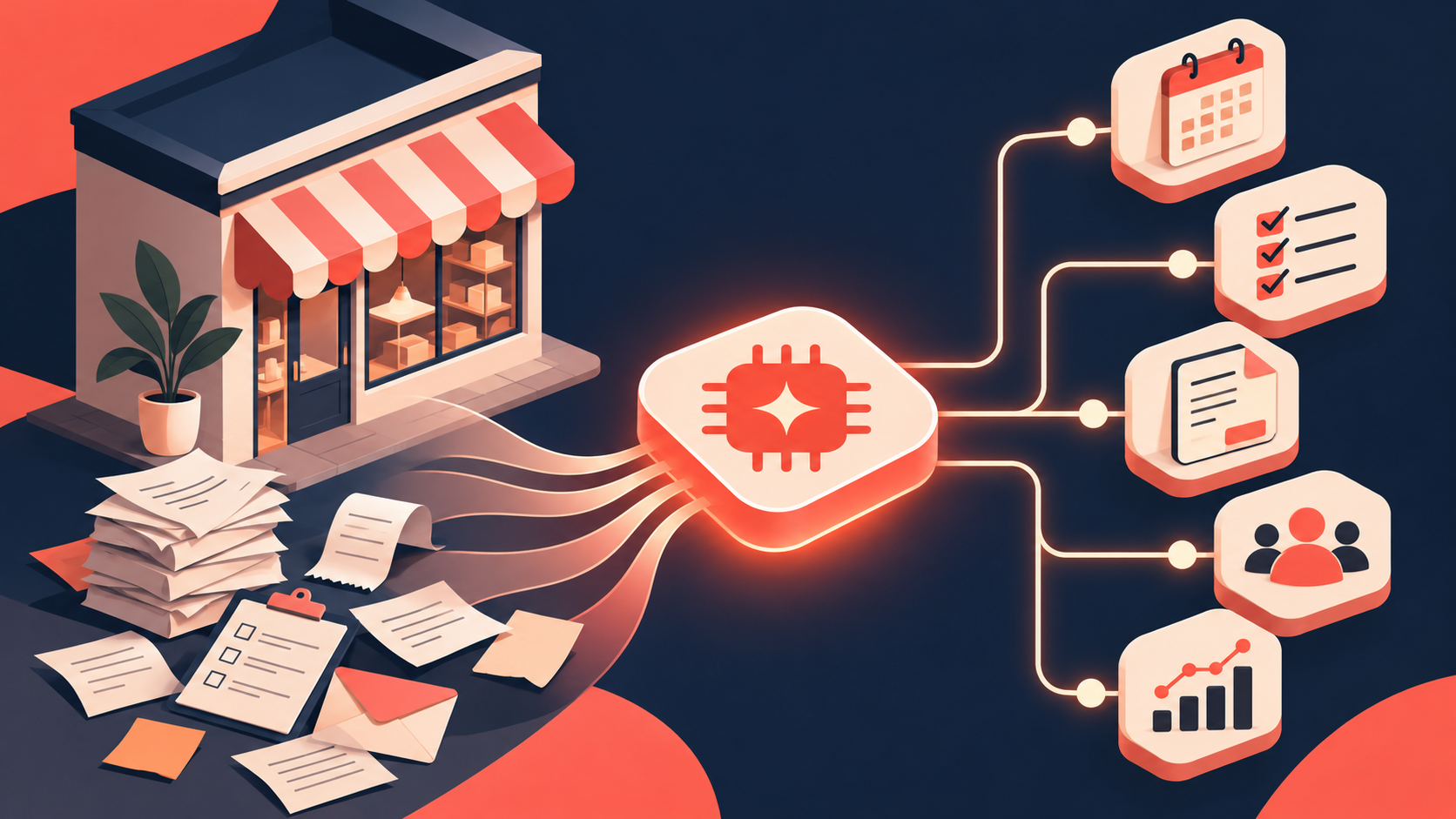
An inbox, spreadsheet, and loose to-do list can work for years. But once applications grow, it becomes more difficult to see who picks up what. AI business automation helps organize information and support recurring steps. The best first step is not to choose the latest tool, but to delineate one recognizable problem.

What is AI business automation?
In ordinary automation, software follows pre - established rules. AI can also, for example, summarize text or organize a message. Together they can support a work process: an application arrives, is classified and appears with a summary to the appropriate employee. It checks the content and determines the answer.
Start with a process that you can measure
Choose work that comes back regularly, is sufficiently standardized, and has a clear owner. Map how many applications are received, how much time follow-up takes and where transfers go wrong. Later, compare the same standards with the situation after introduction. Use those numbers as a baseline measurement, not as a promise of a particular outcome.
Five applications for SMEs
- Incoming requests: categorize and send to the responsible colleague.
- Response proposals: preparing drafts that an employee checks.
- Task succession: give a notification when an agreed step is missing.
- Report: summarize existing data for a periodic consultation.
- Stock: identify when data indicates a possible shortage.

Where is human control needed?
AI can make mistakes or miss context. Therefore, have sensitive decisions, payments, human resources and important customer communications reviewed by competent people. Record what data the application needs, who gets access, and how exceptions are picked up. Test with examples first and check regularly whether the outcome is still correct.
A practical start in four steps
First, describe the current method and the desired result. Then choose one process and agree on an owner and measuring points. Test the solution with real scenarios, including incomplete or unexpected inputs. After that, evaluate with the people who work with it and only scale up if the approach is reliable.
Example: a request from start to finish
Suppose a company receives requests through a contact form. An initial version of the workflow registers the request, suggests a category, and creates a task. The employee checks the summary, replenishes missing information and decides when the client will receive a response. If the system does not recognize the question, it goes to a general queue. This way, the application remains visible and there is always a person in charge.
What preparation is needed?
Make an overview of the current steps, the applications used and the data that moves between systems. Collect examples of common applications and exceptions. Discuss with employees what information they need to do their job well. Also determine who can approve changes to the workflow and how an employee can fix an error.
Choose a limited trial period in advance and compare, for example, turnaround time, corrections, and pending tasks with the baseline measurement. Do not look exclusively at time savings: a good solution must also be understandable for the team and reliably deal with customers and data.
Do you want to research what suits your organization? Discuss your processes with Digivance.
Read also about AI Business Automation and Management at Digivance.